
The Ultimate Guide to Real-World Assets (RWA) in Crypto for 2025
Real World Assets (RWA) Are Becoming Crypto’s Trillion-Dollar Opportunity in 2025
Table of Contents
For years, the narrative around cryptocurrency has been dominated by speculative trading and decentralized memecoins. While that energy remains, a more profound, foundational shift is underway in 2025: the tokenization of Real-World Assets (RWA). This isn’t just a niche trend; it’s the bridge connecting the trillion-dollar traditional finance (TradFi) world with the efficiency and transparency of decentralized finance (DeFi).
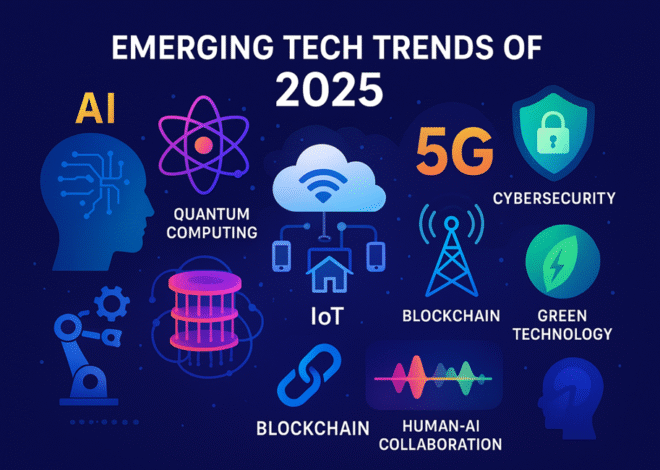
This move towards tangible asset-backed value is part of the broader emerging tech trends of 2025 we’ve been tracking, where digital and physical realities converge.
What Are Real-World Assets (RWA) in Crypto?
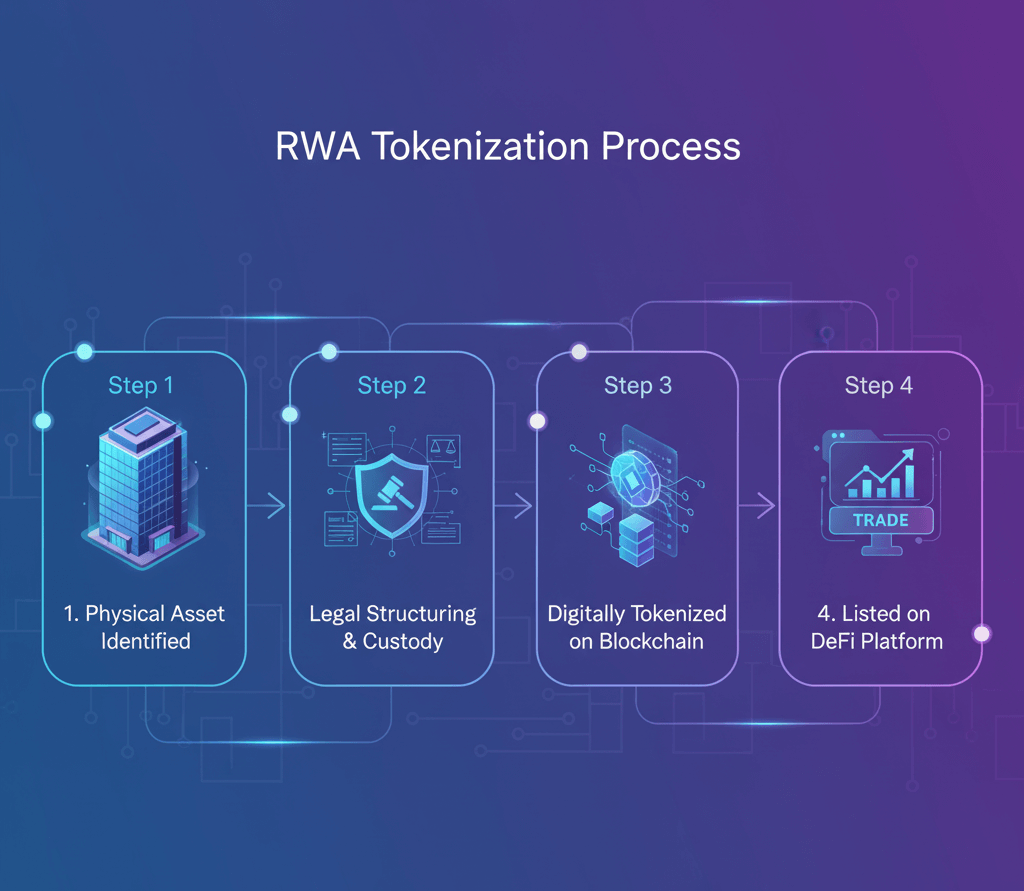
In simple terms, Real World Assets involves representing ownership of a physical or traditional financial asset on a blockchain through a digital token. Think of it as creating a digital twin for a valuable object. This token can then be bought, sold, and traded on crypto platforms, bringing unparalleled liquidity to previously illiquid markets.
Common examples of Real World Assets include:
- Tokenized precious metals (Gold, Silver)
- Real estate properties
- U.S. Treasury bonds and bills
- Corporate debt
- Invoices and trade finance
- Carbon credits
The Driving Forces Behind the Real World Assets Boom in 2025
Why is Real World Assets exploding now? Several key factors are aligning to create the perfect storm for adoption.
1. The Search for Yield in a High-Interest Environment
With interest rates remaining elevated, institutional investors are actively seeking stable, yield-generating assets. Tokenized U.S. Treasury bills have emerged as a star product, allowing global investors to earn a dollar-denominated yield on-chain, 24/7. Platforms like Binance.com have been instrumental in providing access and liquidity for these new asset classes, showcasing their growing importance.
2. Regulatory Clarity is (Slowly) Emerging
The regulatory fog is beginning to lift in key jurisdictions. Frameworks that define the legal status of digital securities are being developed, giving large financial institutions the confidence they need to participate. This is a critical step towards mainstream legitimacy.
3. Technological Infrastructure is Maturing
The scalability and security of blockchain networks like Ethereum, which we explored in our article on the future of Ethereum upgrades, are finally robust enough to handle the demands of multi-billion dollar financial markets. Layer 2 solutions ensure low fees and fast transactions, making the user experience seamless for everyone.
The maturation of blockchain oracles and secure custody solutions has been a final critical piece of the puzzle for Real-World Assets (RWA). These technologies provide the essential, trusted link between the tangible asset in the physical world and its digital token on the blockchain. This robust infrastructure assures investors that the value of their tokenized Real-World Assets (RWA) is securely backed, mitigating a key historical concern and paving the way for institutional capital.
The regulatory landscape for Real-World Assets (RWA) is rapidly evolving from a barrier into a catalyst. In 2025, we’re seeing specific jurisdictions establish ‘safe harbors’ with clear rules for issuing and trading digital securities. This proactive regulatory clarity is crucial, as it provides the legal certainty required for major TradFi institutions to allocate significant capital to Real-World Assets (RWA) projects, moving them from pilot programs to core portfolio holdings.
Top Real World Assets Use Cases Reshaping Industries in 2025
The application of Real World Assets is not theoretical; it’s already transforming specific sectors.
Beyond established sectors, we are seeing innovative applications emerge in intellectual property and art. By tokenizing these non-physical yet valuable Real-World Assets (RWA), creators can unlock liquidity from their patents or artwork, allowing for fractional investment and new royalty distribution models. This expansion of what constitutes a tokenizable asset dramatically broadens the scope and potential market size for the entire Real-World Assets (RWA) ecosystem.
The market dynamics for Real-World Assets (RWA) are fundamentally shifting from simple tokenization to sophisticated programmable finance. Smart contracts attached to these tokens can automate complex processes like dividend distributions, interest payments, and compliance checks. This programmability injects a new layer of efficiency and transparency into managing Real-World Assets (RWA), reducing administrative overhead and creating a more dynamic investment vehicle that was previously impossible in traditional finance.
Private Credit and Lending
Blockchain is dismantling traditional barriers to capital. Companies can now secure loans by tokenizing their assets (like real estate or inventory) as collateral, accessing a global pool of lenders without a bank as an intermediary. This is particularly powerful for small and medium-sized enterprises (SMEs) in emerging markets.
Fractionalized Real Estate
You no longer need to be a millionaire to invest in prime commercial real estate. Tokenization allows a single property to be divided into thousands of digital shares, enabling fractional ownership. This democratizes access to a historically exclusive asset class and provides liquidity to a market where selling a property can take months.
The New Era of Commodities Trading
Tracking the provenance and authenticity of physical commodities like coffee, wheat, or diamonds is a massive challenge. Tokenizing these assets on a blockchain creates an immutable audit trail, reducing fraud and streamlining supply chains. This level of verification and automation is a hallmark of the intelligent systems we discussed in the context of the Agentic Organization.
The tokenization of Real-World Assets (RWA) is proving to be a powerful accelerator for the green energy transition. Projects can now tokenize shares in solar farms or wind parks, allowing retail and institutional investors globally to fund and own a piece of sustainable infrastructure. This not only democratizes green investing but also injects much-needed liquidity into a capital-intensive sector, proving that Real-World Assets (RWA) can be a force for both financial innovation and positive environmental impact.
An emerging frontier for Real-World Assets (RWA) is the high-end luxury and collectibles market. Assets like fine art, rare vintage cars, and exclusive jewelry are being fractionalized through tokenization. This allows a global audience to own a share of a multimillion-dollar painting or a classic Ferrari, making these exclusive Real-World Assets (RWA) accessible to a new generation of investors and democratizing ownership in a historically opaque and illiquid market.
The Challenges: What’s Still Holding RWA Back?
Despite the promise, the Real World Assets movement faces hurdles:
- Legal Compliance: Navigating the complex web of international securities laws is a significant challenge for issuers.
- Oracle Reliability: The connection between the physical asset and its digital token depends on “oracles” to feed real-world data onto the blockchain. Their security is paramount.
- Custody: Safely storing the underlying physical asset (e.g., gold in a vault) requires trusted, regulated custodians.
Looking forward, the success of Real-World Assets (RWA) will hinge on the development of robust cross-chain interoperability standards. For this market to reach its trillion-dollar potential, liquidity cannot be isolated on single blockchains. The ability to seamlessly move tokenized assets across different networks will be crucial for creating a unified global market for Real-World Assets (RWA), ensuring maximum efficiency and accessibility for all participants.
A nuanced challenge for the Real-World Assets (RWA) sector is establishing universal standards for the legal enforceability of on-chain ownership. While a digital token on a blockchain is transparent, its direct legal claim to a physical asset like a building or a shipment of goods must be ironclad across different countries. The industry’s focus is now on creating standardized legal frameworks that ensure if you hold the token, you indisputably hold the rights to the underlying Real-World Assets (RWA), which is fundamental for widespread trust.
To address the custody challenge, the industry is rapidly advancing with institutional-grade, regulated custody solutions that combine cutting-edge technology with traditional financial safeguards. These services provide secure vaulting for physical assets and use multi-party computation (MPC) and multi-signature wallets for the digital tokens. This dual-layer security is becoming the gold standard, ensuring that the bridge between the physical Real-World Assets (RWA) and their on-chain representations is both resilient and trustworthy for all market participants.
Conclusion: The Inevitable Fusion of Finance
Real-World Asset tokenization is more than a trend; it’s the next logical evolution for both crypto and traditional finance. By 2025, we are witnessing the early stages of a massive shift where the lines between Wall Street and the Blockchain are blurring. This fusion promises a more open, efficient, and accessible global financial system.
For investors and enthusiasts, understanding Real World Assets is no longer optional—it’s essential to understanding the future of money itself.
Want to stay updated on the latest at the intersection of finance and technology? Let’s talk.
(Explore more deep dives in our Crypto section and see how it connects with the latest Tech innovations.)