
Agentic Organizations (2025): The Secret to Future-Proofing Your Business
Table of Contents
The world of work is undergoing a profound transformation, one that’s being fundamentally reshaped by the relentless advance of artificial intelligence. We’re moving beyond simple automation and into an era where AI isn’t just a tool, but an increasingly autonomous collaborator. This shift is giving rise to a new organizational model: the agentic organization.
Imagine a company where AI isn’t confined to back-office tasks but actively participates in decision-making, executes complex projects, and even learns and adapts, much like a human team member. This isn’t science fiction; it’s the emerging reality that forward-thinking enterprises are already beginning to embrace. The agentic organization represents a paradigm shift, moving from hierarchical, process-driven structures to dynamic, adaptable entities where humans and AI agents work synergistically.
This article will delve deep into the contours of this next paradigm for the AI era. We’ll explore what defines an agentic organization, the foundational principles that underpin its operation, and the profound implications it holds for leadership, culture, and the very nature of work itself. Get ready to rethink how businesses will thrive in a world increasingly powered by intelligent agents.
Understanding the “Agentic” in Organizations
At its core, an “agentic” organization is one characterized by the widespread deployment and integration of AI agents. But what exactly constitutes an AI agent in this context?
An AI agent is more than just a piece of software. It’s an autonomous program capable of perceiving its environment, reasoning about its observations, making decisions, and taking actions to achieve specific goals. Think of it as a digital entity with a degree of independence and initiative.
Here’s a breakdown of key characteristics:
- Autonomy: Agents can operate without constant human oversight, initiating tasks and making choices based on their programming and learned experiences.
- Proactivity: They don’t just react; they anticipate needs, identify opportunities, and take steps to achieve objectives.
- Goal-Oriented: Each agent or system of agents is designed with clear objectives, whether it’s optimizing supply chains, generating marketing content, or managing customer interactions.
- Learning and Adaptation: Advanced agents can learn from new data, adapt their strategies, and improve their performance over time, often leveraging machine learning.
- Interaction: They can interact with other AI agents, human employees, and various digital systems.
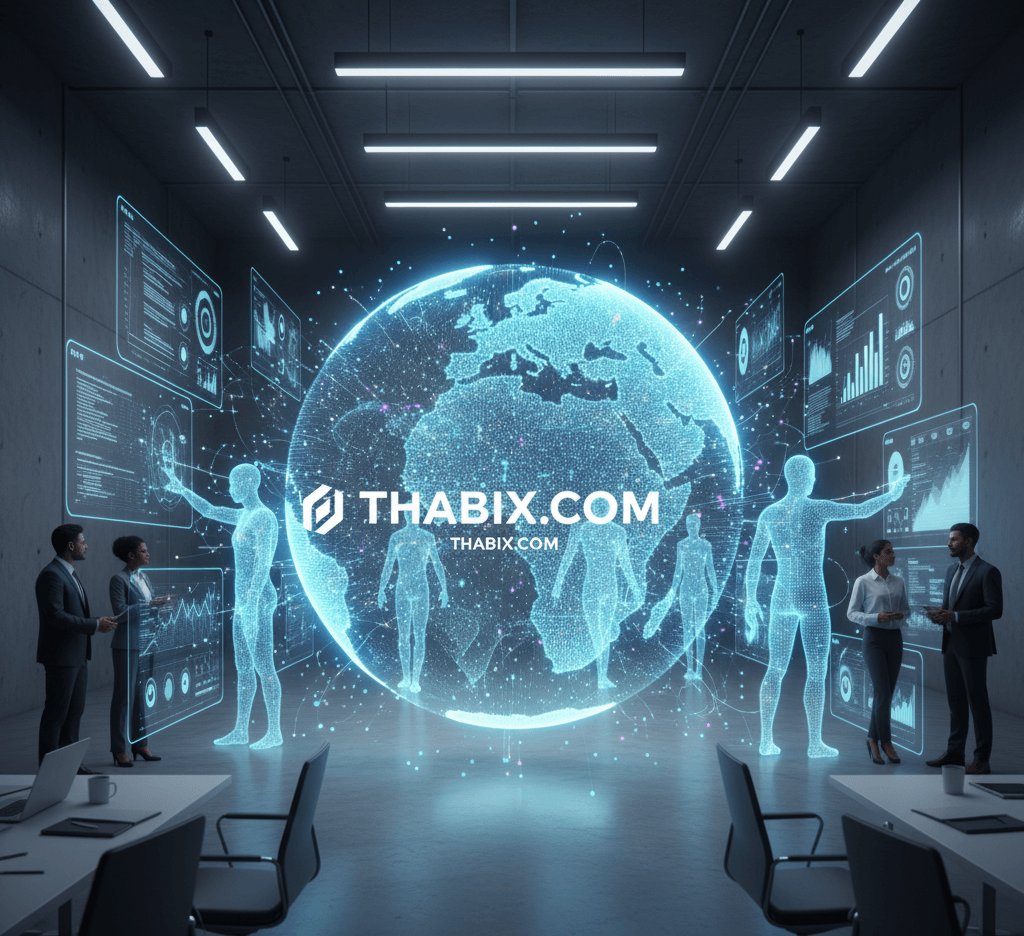
In an agentic organization, these AI agents aren’t siloed tools; they are integrated components of the operational fabric, working alongside humans and, crucially, with each other to achieve collective organizational goals.
Why the Agentic Paradigm is Emerging Now
The concept of intelligent agents isn’t new, but several factors are converging to make the agentic organization not just possible, but increasingly necessary for competitive advantage:
The Explosion of Data
Modern businesses generate and consume an unprecedented volume of data. Human teams, even large ones, struggle to process, analyze, and act upon this data effectively. AI agents excel at this, identifying patterns, anomalies, and insights at speeds impossible for humans.
Advancements in AI Capabilities
Recent breakthroughs in machine learning, natural language processing (NLP), computer vision, and reinforcement learning have dramatically enhanced AI’s capabilities. Large Language Models (LLMs), for instance, can now generate human-quality text, summarize complex documents, and even write code, opening up new possibilities for autonomous content creation and analysis.
The Need for Agility and Adaptability
In a rapidly changing global market, organizations must be exceptionally agile. Traditional hierarchical structures can be slow and bureaucratic. Agentic organizations, with their distributed intelligence and autonomous components, are inherently more adaptable and responsive to market shifts.
The Quest for Efficiency and Innovation
Businesses are constantly seeking ways to improve efficiency, reduce costs, and foster innovation. AI agents can automate routine tasks, optimize complex processes, and even identify novel solutions to problems, freeing up human talent for higher-value, creative work.
The Evolution of Human-Machine Collaboration
As AI becomes more sophisticated, the nature of human-machine interaction is evolving. We’re moving from humans instructing machines to humans collaborating with intelligent entities that can offer suggestions, execute plans, and even challenge assumptions. This collaboration forms the bedrock of the agentic organization.
Key Characteristics of an Agentic Organization
An agentic organization isn’t just a company that uses AI; it’s an organization whose very structure, processes, and culture are designed around the seamless integration and collaboration of human and AI agents. Here are its defining characteristics:
1. Distributed Intelligence and Decision-Making
Unlike traditional models where intelligence is concentrated at the top, an agentic organization distributes intelligence across various human and AI agents. Decision-making is decentralized, with AI agents empowered to make choices within defined parameters, supported by human oversight.
2. Adaptive and Modular Structure
The organizational structure is less rigid and more modular. Teams and AI agents can be dynamically assembled and reconfigured to address specific projects or challenges. This flexibility allows for rapid adaptation to new demands.
3. Human-AI Teaming as the Norm
Collaboration between humans and AI agents isn’t an exception; it’s the standard mode of operation. Humans provide strategic direction, creativity, emotional intelligence, and ethical oversight, while AI agents handle data analysis, complex calculations, automation, and execution.
4. Continuous Learning and Optimization
Both human and AI components are designed for continuous learning. AI agents learn from data and interactions, while human teams leverage AI insights to refine strategies and develop new skills. This creates a feedback loop that drives ongoing optimization.
5. Data-Driven Operations
Every aspect of the organization is deeply data-driven. AI agents are constantly collecting, processing, and analyzing data to inform decisions, predict outcomes, and identify areas for improvement. Data becomes the lingua franca for both human and AI communication.
6. Focus on Outcomes, Not Just Processes
While processes are important, the emphasis shifts to achieving desired outcomes. AI agents are often designed with goal-oriented programming, allowing them to find the most efficient path to a target, even if it means deviating from predefined procedural steps.
7. Robust Governance and Ethical Frameworks
Given the autonomy of AI agents, strong governance, ethical guidelines, and monitoring mechanisms are crucial. Organizations must ensure AI operations align with company values, regulatory requirements, and societal expectations. This includes addressing bias, transparency, and accountability.
Reimagining Roles and Responsibilities
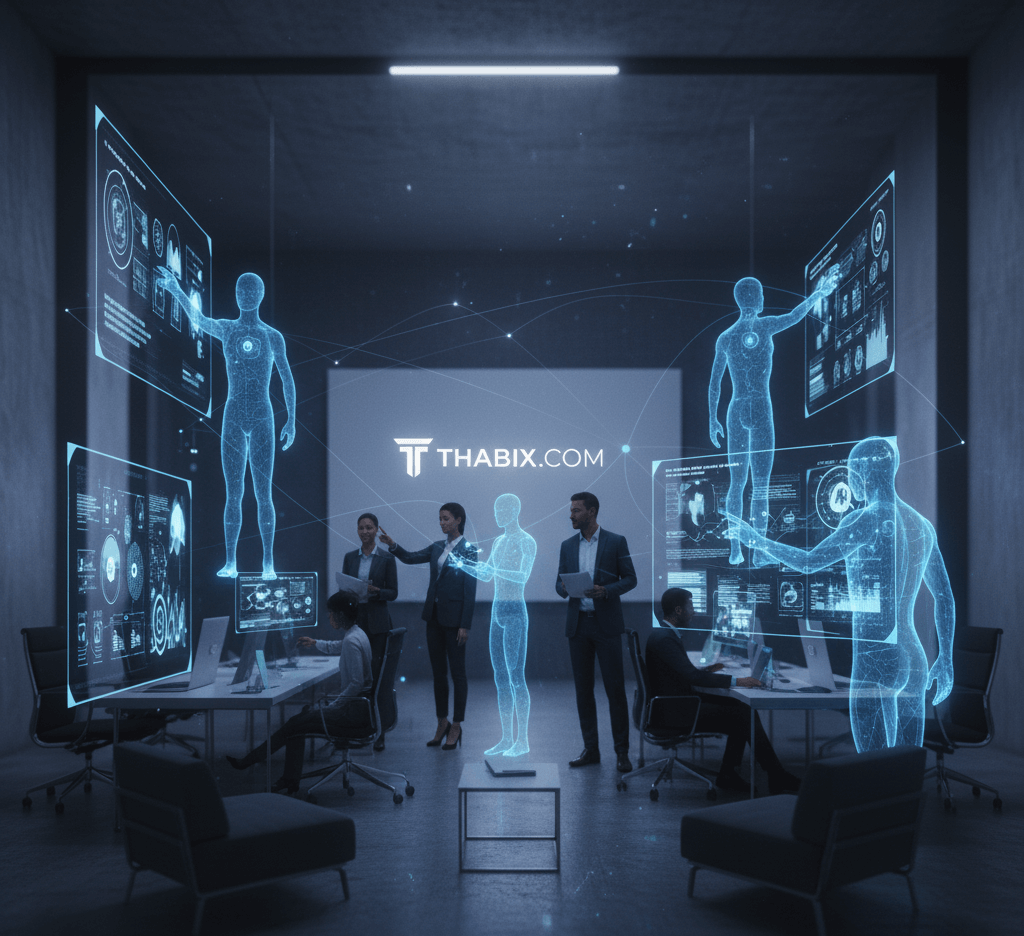
The agentic organization fundamentally redefines traditional job roles and responsibilities. It’s not about replacing humans with AI; it’s about augmenting human capabilities and creating entirely new roles.
New Roles for Humans:
- AI Trainers and Supervisors: Individuals will be needed to train AI models, monitor their performance, and intervene when necessary. This requires a blend of technical understanding and domain expertise.
- AI Ethicists and Governance Specialists: Ensuring AI systems operate ethically, fairly, and compliantly will be a critical function.
- Human-AI Collaboration Facilitators: Roles focused on optimizing the interaction and workflow between human teams and AI agents.
- Prompt Engineers: As LLMs become more prevalent, the ability to craft effective prompts to guide AI outputs will be a valuable skill.
- Creative and Strategic Thinkers: With AI handling much of the analytical and repetitive work, humans will be freed to focus on high-level strategy, innovative problem-solving, emotional intelligence-driven tasks, and creative endeavors.
Evolving Roles for AI Agents:
- Autonomous Researchers: AI agents can scour vast datasets, synthesize information, and present insights, accelerating research and development.
- Automated Customer Service Representatives: Handling routine inquiries, providing personalized support, and escalating complex issues to human agents.
- Predictive Analysts: Forecasting market trends, identifying risks, and recommending proactive strategies.
- Content Generators: Creating drafts of reports, marketing copy, code, and even creative content under human guidance.
- Supply Chain Optimizers: Managing logistics, predicting demand, and optimizing inventory levels with minimal human intervention.
This collaborative ecosystem allows humans to focus on tasks that require uniquely human attributes like empathy, creativity, nuanced judgment, and complex strategic thinking, while AI agents handle the data-intensive, repetitive, and rule-based tasks with unparalleled speed and accuracy.
For more insights into integrating cutting-edge technologies into your business, explore our resources on Thabix.com’s Tech Solutions.
Building the Foundation: Technology and Infrastructure
Establishing an agentic organization requires a robust technological backbone. It’s not just about acquiring AI tools, but about creating an interconnected ecosystem where these tools can communicate and collaborate effectively.
1. Cloud-Native Architecture
Scalability, flexibility, and access to powerful computing resources are paramount. Cloud platforms (AWS, Azure, GCP) provide the infrastructure needed to deploy and manage AI models, large datasets, and distributed agent systems.
2. Advanced Data Management Platforms
A unified and well-governed data strategy is crucial. This includes data lakes, data warehouses, and robust data pipelines that ensure data quality, accessibility, and security for AI agents.
3. AI/ML Operations (MLOps)
MLOps platforms are essential for managing the entire lifecycle of AI models, from development and training to deployment, monitoring, and retraining. This ensures that AI agents remain effective, up-to-date, and free from degradation.
4. Integration Layers and APIs
Seamless communication between different AI agents, legacy systems, and human interfaces requires robust Application Programming Interfaces (APIs) and integration platforms. This facilitates the flow of information and actions across the organization.
5. Cybersecurity and Trust Mechanisms
With increased autonomy and interconnectedness, cybersecurity becomes even more critical. Robust security protocols, access controls, and trust frameworks are necessary to protect sensitive data and prevent malicious interference with AI agents.
6. Explainable AI (XAI) Tools
As AI makes more decisions, the ability to understand why an AI agent made a particular choice becomes vital for human oversight, auditing, and trust. XAI tools help in demystifying AI’s “black box.”
Overcoming Challenges and Ethical Considerations
The transition to an agentic organization is not without its hurdles. Leaders must proactively address potential challenges to ensure a smooth and responsible evolution.
1. Skill Gaps and Workforce Reskilling
A significant challenge will be upskilling and reskilling the existing workforce. Employees will need new competencies in AI literacy, data interpretation, human-AI collaboration, and prompt engineering. Organizations must invest heavily in continuous learning programs.
2. Change Management and Cultural Resistance
Introducing autonomous AI agents can be met with resistance due to fear of job displacement or discomfort with new ways of working. Effective change management strategies, transparent communication, and involving employees in the transition are crucial.
3. Data Quality and Bias
The performance of AI agents is heavily dependent on the quality and integrity of the data they process. Biased or incomplete data can lead to skewed outcomes and perpetuate inequalities. Rigorous data governance and bias detection are essential.
4. Ethical Dilemmas and Accountability
As AI agents gain more autonomy, complex ethical questions arise. Who is accountable when an AI agent makes a flawed decision? How do we ensure fairness, transparency, and privacy? Establishing clear ethical guidelines and legal frameworks is paramount. For a deeper dive into these complex issues, consider resources like those found on TechCrunch’s AI Ethics section (opens in a new tab).
5. Integration Complexity
Integrating diverse AI systems with existing legacy infrastructure can be technically challenging. A phased approach, robust API management, and strong architectural planning are needed.
6. Cybersecurity Risks
Autonomous agents can become targets for cyberattacks, and a compromise could have widespread organizational impact. Advanced security measures and incident response plans are critical.
7. The Human Element of Trust
Building trust between human employees and AI agents takes time and consistent positive experiences. Explainable AI, clear communication about AI capabilities and limitations, and reliable performance are key to fostering this trust.
The Future of Leadership in an Agentic World
Leadership in an agentic organization will look significantly different. The focus will shift from command-and-control to enablement, orchestration, and ethical stewardship.
- Visionary and Strategic: Leaders will need to articulate a clear vision for how humans and AI will collaborate to achieve organizational goals.
- Orchestrators of Ecosystems: They will be responsible for designing and managing the complex ecosystem of human and AI agents, ensuring they work harmoniously.
- Ethical Guides: Setting and enforcing ethical guidelines for AI use will be a core leadership responsibility.
- Talent Developers: Investing in continuous learning and fostering a culture of adaptability will be crucial for empowering the human workforce.
- Experimentation and Innovation Advocates: Leaders must encourage a culture of experimentation, allowing teams to explore new ways of leveraging AI and learn from failures.
This new style of leadership requires a blend of technical understanding, strategic foresight, and exceptional emotional intelligence to navigate the complexities of human-AI collaboration.
Navigating the Transition: A Roadmap to Agentic Transformation
Transitioning to an agentic organization is a marathon, not a sprint. It requires a strategic, phased approach.
- Assess Current State & Vision: Begin by evaluating existing processes, identifying areas ripe for AI augmentation, and defining a clear vision for the agentic future.
- Pilot Programs & Experimentation: Start with small, contained pilot projects. This allows teams to gain experience, demonstrate value, and refine approaches without disrupting core operations.
- Invest in Data Infrastructure: Ensure clean, accessible, and well-governed data, as it’s the lifeblood of all AI agents.
- Develop AI Literacy: Launch comprehensive training programs to upskill employees on AI concepts, tools, and human-AI collaboration best practices. Explore resources at Thabix.com’s Learning Hub.
- Establish Governance & Ethics: Proactively develop policies, ethical guidelines, and accountability frameworks for AI deployment and operation.
- Foster a Culture of Learning & Adaptation: Encourage continuous learning, psychological safety for experimentation, and a mindset that embraces change.
- Scale Incrementally: As pilot programs prove successful, gradually expand the integration of AI agents across more functions and departments.
- Monitor, Evaluate, and Iterate: Continuously monitor the performance of AI agents and human-AI teams, gather feedback, and iterate on strategies and technologies.
The journey to becoming an agentic organization is an evolutionary process that will redefine competitive advantage in the coming decades.
Conclusion: The Dawn of a New Enterprise Epoch
The agentic organization is not merely an incremental improvement on existing models; it represents a fundamental rethinking of how work gets done, how value is created, and how businesses interact with their environment. It’s a paradigm shift driven by the maturity of AI and the ever-increasing demand for speed, efficiency, and adaptability.
By embracing this next paradigm, businesses can unlock unprecedented levels of productivity, accelerate innovation, and create more engaging and fulfilling roles for their human workforce. It’s a future where AI handles the computational heavy lifting, allowing humans to soar in areas of creativity, empathy, and strategic foresight.
The contours of this new era are becoming clearer, but the details are still being written by pioneering organizations. Those that proactively understand, embrace, and ethically navigate the complexities of the agentic organization will be the ones that lead the market and redefine success in the AI era. For further reading on business transformation and technological advancements, visit Thabix.com.